Published on28/08/2026
Choosing a metal is usually treated as a purely aesthetic decision, but it also determines your maintenance costs for the next twenty years and whether the ring keeps hold of its stone.
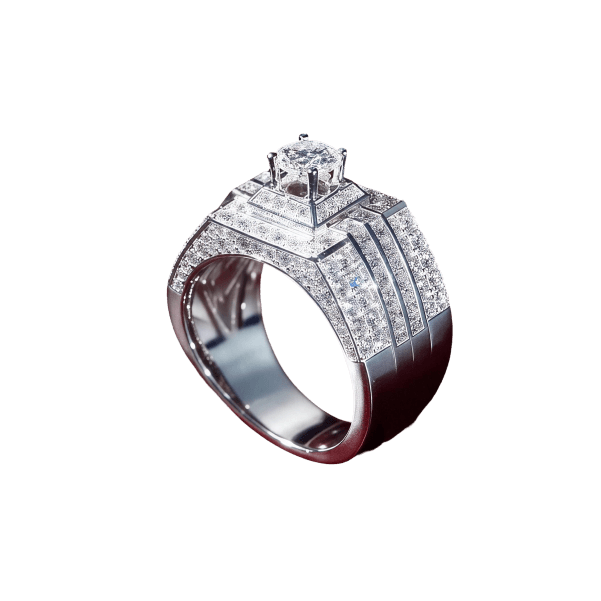
WHITE GOLD is the most misunderstood of the three. It is not a naturally white metal. It is yellow gold mixed with a white alloy — palladium or nickel — and then plated with a thin layer of rhodium. It is that rhodium layer, not the alloy itself, that produces the bright mirror-white you see in the shop.
And rhodium wears. After 18 to 24 months of regular wear it thins and exposes the white gold beneath, which is faintly yellow or warm grey. The first signs appear on the underside of the shank, where it rubs the neighbouring finger. This is normal wear, not a defect, and no amount of cleaning restores it — only replating brings the white back.
This is an ongoing cost that many white gold buyers are never told about. At PhuocSwiss, replating labour is free for rings made in our workshop, but that is not universal, so ask before you buy.
PLATINUM is naturally white all the way through, so it never needs replating. It is also considerably denser and tougher than gold, and this is the most important point: platinum prongs hold a stone more securely and last longer than gold prongs. For a large and valuable stone, platinum is the safest choice.
But platinum has three costs. It is noticeably heavier — you feel the difference the moment you pick a platinum ring up, and someone unused to it may find it heavy on the hand. It costs 40 to 60 percent more than 18K gold for the same design, partly the metal price and partly because it is harder to work and needs a specifically experienced bench.
And platinum ages in its own way. It does not lose metal when scratched; the metal is merely displaced, forming a soft matte surface called patina. Many people love that subdued look and read it as a record of time. Others find the ring looks tired and have it polished periodically. There is no right answer, but it is worth knowing in advance so it is not a disappointment.
ROSE GOLD takes its colour from copper in the alloy. That has two good consequences. First, the colour runs THROUGH the metal rather than sitting on it, so it never fades and needs no maintenance at all. Second, copper hardens the alloy, so rose gold is in practice the hardest of the three at any given karat.
The drawback of rose gold is mainly about whether it suits. Its warm tone flatters olive and warm skin, but against very fair skin it can look washed out or draw out redness in the skin. This has to be tried in person; you cannot judge it from a photograph. Rose gold also contains a lot of copper, so for very sensitive skin it can cause mild irritation.
One note on stacking. Rose gold and white gold worn together look excellent, but if the two rings rub daily the rhodium on the white gold will wear faster than usual. Not a reason to avoid it, just a reason to expect a shorter replating cycle.
In summary, by situation. White gold if you want the brightest white and accept replating every couple of years. Platinum if you want zero maintenance, the most secure setting for the stone, and do not mind the cost. Rose gold if you want a ring that needs no care at all and suits your skin tone — it is also the least troublesome of the three.