Published on21/08/2026
Plenty of customers come back to the showroom after a year or two with the same question: my white gold ring has gone yellow, is it fake. The answer is always no, and the reason lies in how white gold is made.
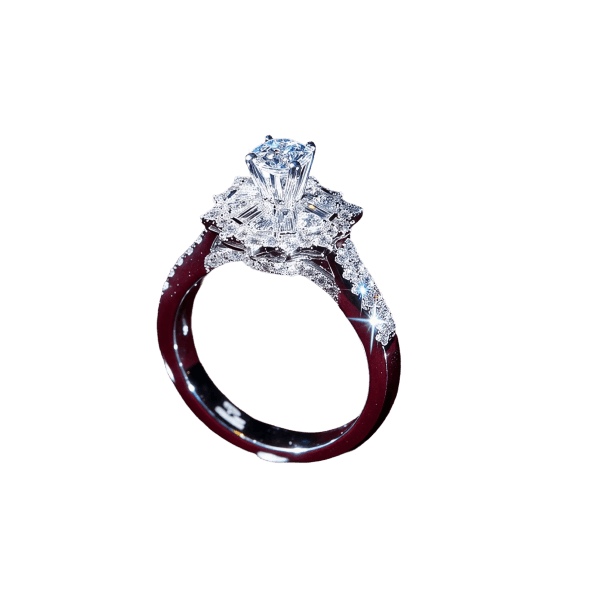
White gold is not a naturally white metal. It is yellow gold mixed with a white alloy, and the result is a faintly yellow or warm grey white rather than a bright one. To achieve the mirror-white you see in the shop, the ring is plated with an extremely thin layer of rhodium — typically half a micron to one micron thick.
Rhodium is a platinum-group metal, very hard and very white. But a layer half a micron thick, however hard, cannot survive being rubbed thousands of times a day indefinitely.
The first SIGN almost always appears on the UNDERSIDE OF THE SHANK, where it touches the neighbouring finger. That is the point of most constant friction. The bright white gradually turns slightly yellow or warm grey, and at first it is only visible on close inspection in good light.
The second sign is the top of the shank going dull and losing its mirror reflection. The third, appearing later, is unevenness: bright where rhodium remains, yellow where it has worn, giving a patchy look.
On TIMING, 18 to 24 months is normal for a ring worn daily. But that number varies considerably by person and by lifestyle. Anyone with sweaty hands, or with more acidic perspiration than average, will see it sooner. So will anyone who regularly uses dish soap or bleach, or who wears the ring to the gym — sometimes as early as 10 months.
Conversely, a ring worn only on occasions can keep its plating for a decade. And a wide mens wedding band typically wears faster than a slim womens ring because there is more surface in contact.
REPLATING is a simple process. The jeweller cleans the surface, polishes lightly, then electroplates a fresh layer of rhodium. It is done the same day, and for rings made in the PhuocSwiss workshop the labour is free.
What you should avoid is LEAVING IT TOO LONG. Once the rhodium is entirely gone, the gold beneath starts to scratch directly. At that point the jeweller has to polish deeper to level the surface before plating, and every deep polish removes a layer of metal. Repeated often enough the shank thins, and on a slim band, over several decades, that becomes a genuine problem.
To EXTEND the cycle: take the ring off before washing dishes, cleaning, using any bleach-based product, applying lotion or perfume, and before exercising. The easy rule is that the ring goes on last when you leave the house and comes off first when you return.
One note if you have it replated elsewhere: ask about the plating thickness. Many places plate very thinly to be quick and cheap, and that layer lasts only a few months. Also remind the jeweller if the ring is engraved inside, because the polishing step can erase it.
If you would rather not think about any of this, there are two options: platinum, naturally white and never needing plating; or white gold with a high palladium content, which is already fairly white so the change is barely noticeable as the rhodium wears. Both cost more, and that is precisely the price of not having to maintain anything.