Published on25/07/2026
Losing a stone is a situation a warranty cannot fix. Almost no warranty anywhere covers a stone lost to wear, because that is treated as the owner maintenance responsibility. The good news is that a stone almost always gives warning first.
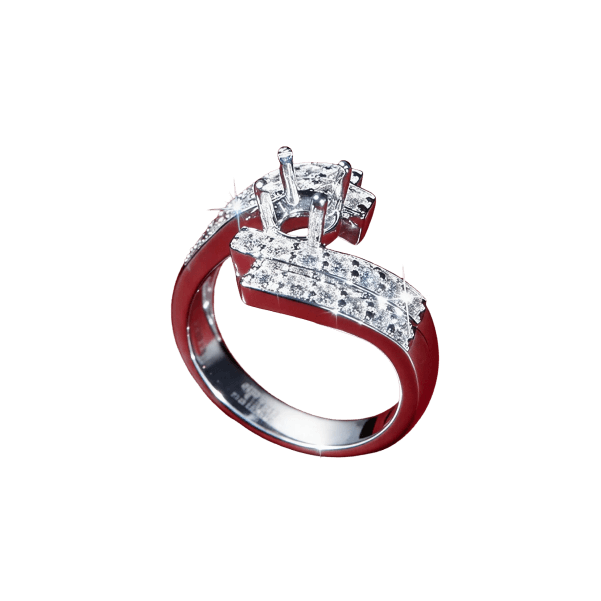
The FIRST SIGN is SOUND. Hold the ring next to your ear and shake it gently. A ring with secure prongs is completely silent. If you hear a faint rattle, almost like a grain of sand, the stone has room to move inside its setting. This is the clearest sign and the easiest to check.
Do this test once a month. It takes ten seconds and catches the problem very early.
The SECOND SIGN is SNAGGING. The ring starts catching on knitwear, scarves, hair, towels. Many people assume that is simply what a stone-set ring does. It is not. A ring in good condition slides over fabric without grabbing. Snagging means a prong tip has bent outward or worn into a sharp edge.
The THIRD SIGN needs looking at. Put the ring under a desk lamp and look straight down at it. Each prong tip should sit slightly OVER the surface of the stone, like a fingernail pressing down. If a tip has worn flush with the stone, or is reduced to a thin ridge, it is no longer holding anything. A phone macro mode shows this far better than the naked eye.
There is a subtler fourth sign: the stone ROTATES. Push gently against the edge of the stone with a fingertip. It should be completely immobile. If it shifts or turns even slightly, take it to a jeweller this week.
All four situations need attention THIS WEEK, not next month. Prongs are the thinnest metal on the ring, and once they have worn enough to signal, the remaining decline is fast. Retipping or tightening usually costs a few hundred thousand dong. Sourcing a replacement stone matched in size, colour and clarity costs hundreds of times that, and for a large centre stone a match may not exist at all.
Several factors accelerate prong wear. Manual work is the biggest. Fine prongs holding a large stone wear faster than heavy ones. 18K gold wears faster than 14K and considerably faster than platinum. And a ring worn continuously without removal wears faster than one worn occasionally.
One specific warning about ultrasonic cleaners. They vibrate, and vibration is precisely what makes an already weak prong release its stone. A great many stones are lost inside ultrasonic cleaners, at home and in shops. The rule: only use an ultrasonic AFTER the prongs have been checked, never before.
On servicing intervals, have the ring checked by a jeweller every six to twelve months. Under a loupe they can see prong wear long before it produces any sign you would notice at home. At PhuocSwiss this check is free for rings made in our workshop, and we clean them at the same time.
Finally, if a stone has already gone: search immediately and search thoroughly in the places you have most recently been, particularly inside clothing, in the car and around sinks. A small stone that has come out is usually still very close by. And stop wearing that ring — with one prong failed, the remaining prongs are carrying more load than they were designed for, and the next stone will follow.