Published on29/07/2026
A mens ring differs from a womens ring in one fundamental way: most of its aesthetic value lies in proportion and in the metal surface, not in a stone. So the two most important decisions are width and finish.
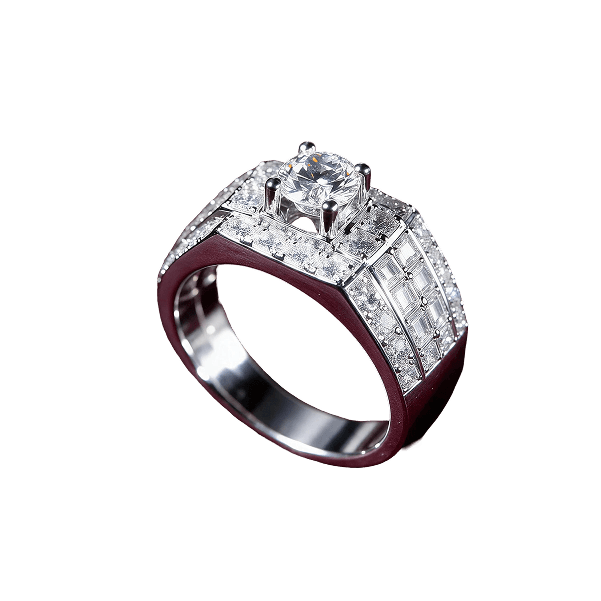
On WIDTH, there is a simple rule that works. Look at the ring finger segment between the knuckle and the base of the finger. The band should occupy about a third of that length. Less and the ring looks thin and lost; more and it touches the knuckle, catches when the finger bends, and visually swallows the finger.
In practice at the showroom, 4 to 6 mm suits most Vietnamese men. 3 mm suits smaller hands or anyone who wants something discreet. Anything from 7 mm up only really works on a large hand with long fingers.
Wide bands also bring a WEIGHT problem. A solid 18K gold band at 8 mm is heavy enough to tire the finger over a full day, and plenty of people wear one for a few weeks and then put it away. The solution is hollowing the inside — rounding the inner surface and removing metal from the middle. Lighter, more comfortable, and easier over the knuckle. Ask directly whether the design you are considering is hollowed.
A sizing note for wide bands: anything from 6 mm up wears TIGHTER than a slim band of the same nominal size, because there is more contact area. If you are used to a 2 mm ring and are buying an 8 mm one, go up half a size. And always try that exact width at the counter rather than extrapolating from the slim ring you already wear.
On SURFACE FINISH, this is what determines how the ring looks after a year rather than on day one. A mirror polish looks best when new, reflecting like glass. But a few months of daily wear covers it in fine scratches and the reflection turns cloudy. Not damaged, but you either accept it or polish it periodically.
Brushed, satin and hammered finishes do the opposite: they hide scratches well because the surface is already irregular. After a few years they look far more even than a polished ring of the same age. For anyone who works with their hands, this is decidedly more practical.
There is a middle path: polished edges with a brushed centre, or the reverse. This keeps an eye-catching contrast while most of the surface still conceals wear.
On MATERIAL, a mens ring takes more impact than a womens, so hardness matters more. 14K gold is distinctly harder than 18K. Platinum is the toughest but also the heaviest, and in a wide band that weight can become a genuine problem. If the ring is one of a wedding pair, remember the rule about matching karat with the other ring.
If it is set with stones, choose a RECESSED setting. Flush-set or bezel-set stones sit level with the metal surface, with no raised prongs to snag or wear. High prongs on a mens ring will be struck sooner or later, and for anyone working with their hands, sooner.
Finally, think about removal. A wide mens ring in a hard material is very difficult to cut off in a hospital emergency — particularly tungsten and titanium, which many hospitals cannot cut with standard ring cutters. For anyone whose work risks crushing injuries, gold or platinum is the safer choice, because they can be cut.