Published on24/08/2026
There is a very common misconception: that diamonds glow. They do not. A diamond only takes in light from its surroundings, bends that light inside the stone, and returns it to the eye. The entire beauty of a diamond is the result of that process, and that process depends completely on the ANGLES of its facets.
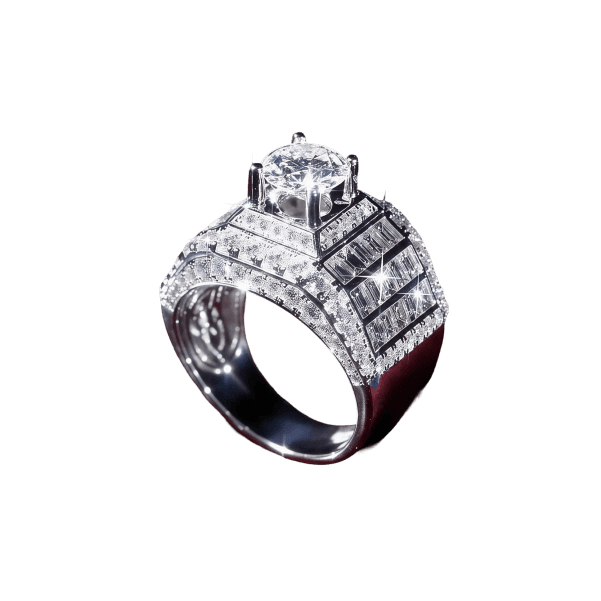
Picture light entering through the table at the top of the stone. It travels down, meets the pavilion facets, and one of three things happens. If the angle is right, the light totally internally reflects — bounces back completely, escaping nowhere — meets a second pavilion facet, reflects again, and exits up through the table toward the eye. That is a stone with fire.
If the stone is cut TOO SHALLOW, the angle between the pavilion and the horizontal is too small. Light striking the pavilion arrives below the critical angle, so instead of reflecting it passes straight through the bottom and escapes. The viewer sees a dark patch in the middle of the stone — what cutters call a fish eye.
If cut TOO DEEP, light reflects off the first pavilion facet but travels sideways rather than upward, and exits through the side. The stone looks dark around the rim and smaller than its weight, because the carat is hidden below the girdle rather than spread across the table.
The band of angles that produces optimal reflection is fairly narrow. For a round brilliant, pavilion angles between 40.6 and 41.0 degrees and crown angles around 34 to 35 degrees give the best results. One or two degrees off is enough to see the difference with the naked eye.
There are three distinct visual effects a good cut produces simultaneously, and they are worth distinguishing because sellers tend to lump them together as sparkle. Brilliance is the amount of white light returned — overall brightness. Fire is dispersion, white light splitting into rainbow colours as it passes through the stone. Scintillation is the alternating flashes of light and dark as the stone or the viewer moves. A well-cut stone has all three; a poorly cut one has none.
Two more factors get little attention: SYMMETRY and POLISH. Symmetry measures how evenly the facets are placed and how well they meet. Polish measures surface quality after finishing. Both are graded separately on a GIA report, and both should read Excellent or Very Good. Poor symmetry sends light rays off course where they cancel each other out.
One more line on the report is routinely misread: FLUORESCENCE. Some stones glow blue under ultraviolet light. Faint or medium fluorescence is usually harmless, and on lower colour grades from I to K a blue fluorescence actually helps the stone look whiter in daylight. Only strong or very strong fluorescence can make a stone look milky. Many buyers avoid fluorescence mechanically and miss cheaper stones that look just as good.
The practical consequence of all of the above, stated briefly: a D colour VVS1 with a Fair cut will look duller than an H colour SI1 cut Excellent. The price gap between those two can reach thirty percent in favour of the first. And everyone can see that the second is the better-looking stone — no loupe, no training required.
So when the budget is tight, Cut is the LAST C to compromise. Carat, Colour and Clarity are what the stone brought out of the ground. Cut is what people made, and it is the only one that decides whether the stone is beautiful.