Published on13/08/2026
An eternity ring is set with stones all the way round. A half eternity is set across the top half only, leaving the lower half plain. It sounds like a small aesthetic distinction, but three substantial practical consequences follow from it.
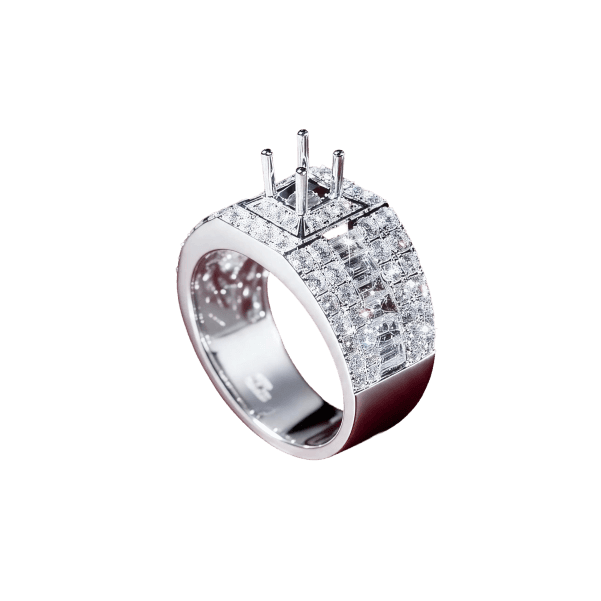
On LOOKS, eternity clearly wins on one point: it shows stones from every angle. When the hand turns, in photographs, stacked with an engagement ring — there is always light catching somewhere. With a half eternity, if the ring rotates slightly the plain section comes to the top and it reads as a plain band.
But that is the only weakness of a half eternity, and it is fixable: a jeweller can add two small beads inside the shank to stop the ring from spinning.
On DURABILITY, half eternity wins decisively. The plain lower shank is exactly where the ring takes pressure when you grip, carry a bag, open a door, lean on a table. Solid metal handles those forces. On an eternity ring, that same position holds small stones pressed against the palm, taking the most impact of anywhere on the ring and the most likely to come loose.
The concrete consequence: an eternity ring needs more serious periodic prong checks, and its rate of stone loss over time is considerably higher. When a stone goes, replacing it is not simply filling the gap — the jeweller has to find a stone matching the neighbours in size, colour and clarity, or the repair is plainly visible.
On COMFORT, the plain shank of a half eternity sits far more kindly against the neighbouring finger. A full circle of stones means prong edges rubbing the index and middle fingers all day, and many people find that distinctly uncomfortable after a few months.
And now the most important point, and the one most often overlooked at purchase: RESIZING. A half eternity resizes normally, because the jeweller cuts the plain lower shank and rejoins it. An eternity ring effectively CANNOT be resized — cutting the shank means cutting straight into the stone line. The only route is to remove every stone, remake the shank and reset them all, which is remaking the ring at close to the cost of a new one.
And fingers will change size. Weight goes up and down, age, pregnancy, weather, illness. For a ring intended to be worn for twenty or thirty years, the odds of needing at least one resize are high. That is why, at the same budget, a half eternity is usually the more level-headed decision.
There is a third option that gets little attention: a three-quarter eternity. It keeps nearly all the look of a full eternity when viewed from the front, while leaving a short plain section at the bottom — just enough for a jeweller to cut when resizing. Less common than the other two, but many workshops will make one to order.
A note on setting styles. Channel setting, where stones sit in a groove between two walls of metal, is more durable than small prongs because there are no prong tips to snag or wear. Pavé sparkles more because less metal covers the stones, but it means many more small prongs and needs closer care. For a ring worn daily, channel is the less troublesome choice.
Finally, if you genuinely want an eternity ring and accept every trade-off above, measure the size with extreme care. Measure three times on three different days, in the late afternoon, and if you fall between sizes take the larger. With this style, measuring wrong offers no second chance.