Published on31/08/2026
A wedding ring is the single most continuously worn piece of jewellery in a person life — twenty, thirty, forty years without coming off. That gives the decisions made at purchase a weight quite unlike a piece worn on occasions.
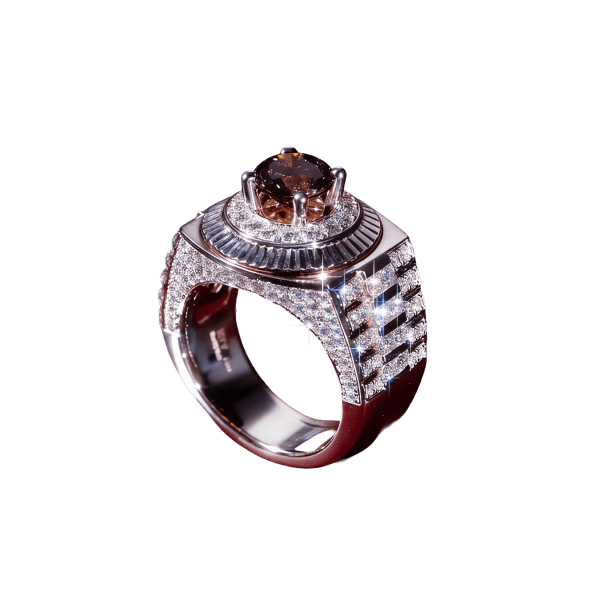
The most common mistake, and the most expensive, is choosing two rings in DIFFERENT GOLD GRADES. The classic case: 18K for her because the colour is better, 14K for him because it is tougher and cheaper. Sensible for each ring alone, but these two rub together every time you hold hands. The softer one wears first, and within a few years its width and thickness have visibly changed while the other is essentially untouched.
The rule: a pair of wedding bands should be the SAME karat and the same metal family. If you want them to differ in colour, differ by gold type — one white and one rose, both 18K, is entirely fine.
The second mistake is choosing width as a pair rather than by hand. Many couples want the two to read as a set and take the same wide profile. The usual result is that the ring on the smaller hand looks heavy and swallows most of the finger segment. 2 to 3 mm suits slim fingers, 4 to 6 mm suits larger ones. Cohesion should come from the metal, the finish and the design details, not from the millimetre figure.
The third mistake, and the one almost nobody considers at purchase: RESIZABILITY. A plain band, or one set with stones only across the top half, resizes easily because the jeweller cuts into the plain lower shank. A band set all the way round, or with a pattern running through the whole shank, effectively cannot be resized — cutting the shank means cutting the stone line or breaking the pattern.
This matters because fingers will certainly change size. Weight changes, age, pregnancy, illness — across twenty or thirty years, needing at least one resize is close to certain. Choosing a style that cannot be resized means accepting that one day the ring will have to be remade.
The SURFACE FINISH deserves more thought than it usually gets. A mirror polish looks best on day one, but after a few months of daily wear it is covered in fine scratches. Brushed, satin or hammered finishes hide scratches well and age more evenly. For something worn without ever taking it off, that is far more practical than initial gloss.
The INNER PROFILE is worth asking about too. A shank with a rounded inner surface, called comfort fit, is noticeably easier to wear than a flat-inside band, particularly in wider profiles. It also passes the knuckle more easily. In exchange it uses more metal and costs a little more. For a ring worn all day, that difference is worth paying.
If there is already an engagement ring and the plan is to stack, bring it along when choosing the band and try them together at the counter. A high setting, or one with a protruding basket, leaves a gap between the two. Closing that gap requires a band contoured to the setting, and that should be commissioned at the same time rather than later.
Finally, ask in detail about warranty and resizing policy BEFORE the deposit, not after. For something that will be on a hand for thirty years, the most valuable question is whether this shop will still be here in ten, and what they do when the ring wears. At PhuocSwiss, rings made in our workshop carry a lifetime warranty on labour — polishing, rhodium replating, prong retipping, and resizing within two sizes.