Published on06/09/2026
Pure gold is a very soft metal. So soft that it cannot be used for jewellery worn daily: a 24K ring would dent and deform within months. So all jewellery is an alloy, and the K number tells you the proportion of gold in that alloy.
18K is 18 parts in 24, or 75 percent pure gold. 14K is 14 parts in 24, or 58.3 percent. The remainder is alloy — typically copper, silver and zinc, and for white gold, palladium or nickel as well. It is this alloy portion, not the gold, that determines hardness and colour.
On COLOUR, 18K gives a visibly warmer, deeper yellow, simply because there is more gold in it. Put two rings side by side and the difference is immediate. This is the main reason 18K is treated as the standard for fine jewellery across Asia, where a deep gold colour is bound up with the idea of value.
On HARDNESS, 14K is distinctly harder than 18K. That sounds paradoxical given gold costs more, but hardness comes from the alloy, and 14K has more alloy in it. The practical result: a 14K ring scratches less, dents less, and most importantly its prongs hold a stone more securely over time.
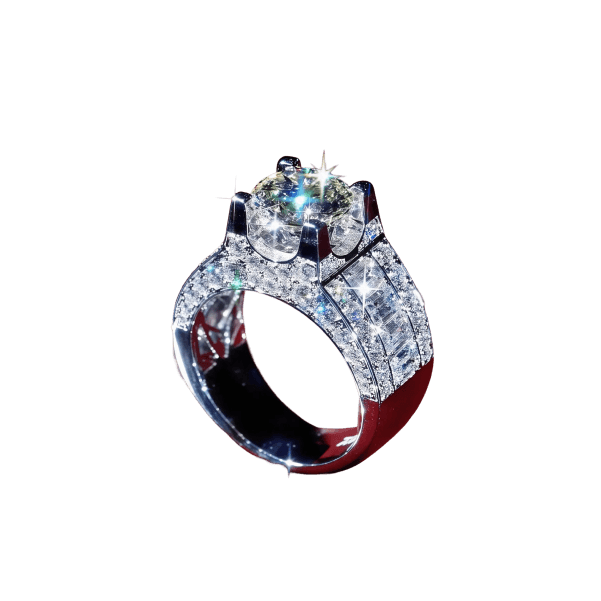
That prong point deserves emphasis because it is a real risk. Prongs are the thinnest metal on a ring and take the most abrasion. On a setting with fine prongs holding a large stone, metal hardness stops being an aesthetic question and becomes the question of whether the stone is still there in ten years.
On PRICE, 14K costs around 20 percent less for the same design, because there is less gold in it. On a mid-range ring that gap is modest, but on a wide band or a heavy mens ring the number becomes meaningful.
There is one factor few people consider: ALLERGY. Inexpensive white gold is often alloyed with nickel, and nickel is the most common contact allergen in jewellery. Because 14K has more alloy, it also has more nickel if that formulation is used. Anyone with sensitive skin should ask specifically whether the alloy uses palladium or nickel, and if sensitive, choose palladium-alloyed 18K or move to platinum altogether.
Geography plays a part too. In the United States, 14K is the default and 18K is the premium option. In Europe and Asia, 18K is the default and 14K is regarded as lower grade. If you plan to resell, or to move between those regions, this affects buy-back value.
How to choose in practice. Choose 18K if: you are in Vietnam and care about the depth of colour, the ring is a wedding or anniversary piece meant to carry lasting meaning, the wearer works in an office, or you have sensitive skin. Choose 14K if: the wearer works with their hands, the setting has fine prongs holding a large stone, the design is a wide band and you want to save, or this is a daily ring in a demanding environment.
Our workshop at PhuocSwiss works mainly in 18K, because Vietnamese customers prefer the deeper colour and because for ordinary daily wear the softness of 18K is not a genuine problem. But when a customer describes manual work, or when the design they have chosen uses fine prongs on a large centre stone, we say plainly that 14K is the sounder choice — even when that makes the invoice smaller.